The 5 Habits Framework

1) Evidence (How do I know what's true?)

2) Perspective (Who might think differently?)

3) Connections (What other areas of knowledge are connected?)

4) Supposition (How might it be different if..?)

5) Significance (Is this important?)
Showing posts with label science. Show all posts

Thursday, April 2, 2015

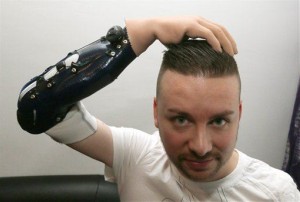
Exoskeleton Boots Put a Literal Spring in Your Step

Ratchet Boots Make Walking 7% Easier

(Carnegie Mellon University College of Engineering)


1)  What are the main components of the prosthetic?  How do you know?  What is the best way to test the device for widespread use? What evidence would be most compelling in convincing your gym teacher that these should be used in class?   

2)  Why might an athlete view this differently than a military veteran?  In what ways might someone from the 1800's view this differently than someone from today?  

3)  To what degree is this related to history more than art?  How is this connected to religion? 

4)  Is there a reason these should be banned?  What would happen if we had similar devices for all limbs?  What might happen if they were only for children?  

5)  In what ways would you benefit from this device?  Who might benefit the most?  What are the long-term effects of this device on people and then society?    

Extension Activities:

1)  Students create a chart of the most beneficial "wearable tech" (glasses, shoes, watches,  Google Glass, etc.)  and rank them according to intrusiveness.  

2)  Students can write a day in the life of a teenager who lives in a world that has adopted mandatory use of these devices.  


Thursday, February 26, 2015

3 Men Get Bionic Hands

Advances in Prosthetics

Milorad Marinkovic shows his bionic arm as he poses for a photograph at his home in Vienna earlier this week.
 (AP Photo/Ronald Zak)

http://www.newscientist.com/article/dn27024-men-have-hands-amputated-and-replaced-with-bionic-ones.html#.VO-QIi7CDIU

1)  How do we know what is true in science?  Is there evidence that this is a promising treatment for many amputees?  What percentage of a body can be replaced before questions of humanity arise?

2)  Why might a person in thee military view this differently than someone who is related to a person born with no arms?  Can I look at it from the recipient's viewpoint?  How is my own experience limited in this story?  How is it related?

3)  How is this connected to sports?  To the military?  Video Games?

4)  How would history change if famous amputees had bionic prostheses?  What if our government banned these prostheses?  What if the government diverted massive funding to researchers studying this?  

5)  Why is this significant?  Is there something more important I should be considering?  If this doesn't affect my life, whose will it impact?

Extension Activities:

1)  Students can outline the development of prosthetics and predict future trends and their social impact.

2)  Students can consider "The Ship of Theseus" and draw connections to prostheitcs and ideas in transhumanism.


Thursday, February 12, 2015

Man Growing an Ear on Own Arm...for Art

Man Growing an Ear on Own Arm...for Art

150203_FT_StelarcEarOnArm
Image by Nina Sellars, courtesy Stelarc

http://www.slate.com/articles/technology/future_tense/2015/02/stelarc_and_other_contemporary_artists_experiment_with_science.html 

1)  What evidence is most convincing that this is art?  What proof do we have that he is an artist?  

2)  Why might his artist friend feel differently about this than a deaf person?  Why might a Chinese person view this differently than an American?  How is my own experience limited in this story?  How is it related?

3)  How is this connected to the GMO food debate?  How is this connected to plastic surgery? Van Gogh?

4)  What would happen if we banned this for art?  Medical use?    

5)  Is this relevant more now or will it be in the future?  What is the long term effect of this modification?  Who is most affected by this?  

Extension Activities

1)  Students can research body modification through time or through cultures and propose future modification trends.

2)  Students can research about the limits of art and defend a policy limit to art or support for unrestricted freedom of expression.

Wednesday, November 19, 2014

The 2014 Word of the Year: Vape


Vape is the 2014 Word of the Year

Vape was chosen as the word of the year for 2014 in part because it provides a window "onto how we define ourselves," says Casper Grathwohl of the Oxford University Press. Here, women exhale vapor clouds during a competition at the Henley Vaporium in Manhattan.
Elizabeth Shafiroff/Reuters/Landov

http://www.npr.org/blogs/thetwo-way/2014/11/17/364802028/take-it-in-vape-is-the-oxford-dictionaries-word-of-the-year

By:  Bill Chappell

1)  What statistics do people use to support the claim that vaping is less harmful than cigarettes?  What evidence is the most salient for determining the harm of cigarettes?  In what ways have smoking habits changed over time?

2)  How might a child of smokers view this story differently than that of a non-smoker?  How might an employee of Philip Morris view this differently than a politician?  How might Barack Obama view this differently than his wife?

3)  What is a mathematical argument for more electronic cigarettes?  How is smoking like drinking soda?  Child abuse?

4)  What would happen if we banned all cigarettes?  All fast food?  What would happen if vapor cigarettes were given free to smokers?

5)  What are the larger implications of this issue?  Does the word of the year award have any significance in the larger society?

Extension Activities:

1)  Students can outline the development of tobacco in America and predict it's future.

2)  Students can create a chart of addiction and advocate for policy action based on their findings.

3)  Students can  study the impact of the "Word of the Year" and rank the  most significant winners of the last 20 years.  


Friday, November 7, 2014

Elon Musk Explains the Hyperloop

Read Revealed: Elon Musk Explains the Hyperloop, the Solar-Powered High-Speed Future of Inter-City Transportation 

5 Habits Collaboration between Kyle Templeton and Seth Jaeger

Photograph by Brendan Hoffman/Bloomberg

http://www.businessweek.com/articles/2013-08-12/revealed-elon-musk-explains-the-hyperloop

By: Ashlee Vance

5 Habits Collaboration between Kyle Templeton and Seth Jaeger
1. What makes you believe the hyperloop is a workable design? Why is Elon Musk a reliable source for determining the cost of building the hyperloop? Which teacher’s opinion of the hyperloop is most valuable to help you make a decision?

2. Who would be most likely to support the construction of the hyperloop? Who would be most likely to oppose it? How might this affect a person living in New York City? In Ozark? From 40 years in the future? What would Franklin Roosevelt have thought of this project? Ronald Reagan?

3. How is this connected to the topic of government? Which past inventor is Elon Musk most like? What might the economic impact be of constructing the hyperloop? What part of this deals with math? Physics? How is this like a bank teller drive through?

4. How would $8 per gallon gasoline change the feasibility of this project? What would happen if Springfield had a hyperloop that connected to Kansas City and/or St. Louis?

5. 5) To what extent would the hyperloop impact the environment? Would the hyperloop promote or discourage urban sprawl? Why? Would this project be a good use of tax dollars?

Extension Activities:

1)  Students can compare/contrast major engineering projects (skyscrapers, canals) to the hyperloop and assess the impact of each.

2)  Students can compare Elon Musk to Tony Stark and rewrite a scene from Iron Man.

3)  Students can outline the math necessary to make the travel time feasible between various cities in the U.S. and beyond.  


Tuesday, October 28, 2014

Hiker Defaces National Parks for the Likes

Why the Creepytings National Parks Vandalism is a Big Deal

creepytings-graffiti

http://www.modernhiker.com/2014/10/23/why-the-creepytings-national-parks-vandalism-is-a-big-deal/

By:  Casey Shreiner

1)  Is photographic evidence reliable?  What's the difference between graffiti and folk art?  How do you know?  Can nature be considered art?  Who might have the most convincing argument?  What information would you need to punish the artist?   

2)  Why might a park ranger and a native American have similar views on this issue?  Different?  Why might there be an issue between urban and rural citizens over this issue?  People over the age of 45 vs. those under?

3)  Have we seen something like before?  Locks on bridges in Paris?    Is this a geography, science, history, or visual arts issue?  How is graffiti like tattooing?  Different?  How does time affect our view of art?  

4)  What if she used Photoshop to make it seem as if the graffiti was real?  How might this be different is she was famous?  A man?  A Native American?  An environmentalist?  What is we banned photography in national parks?  What if there was a special tagging section set aside in every national park?       

5)  What is the impact of this issue?  Will National Park attendance be affected?       

Extension Activities

1)  Students can study the cave paintings of Europe and evaluate the effectiveness of their protection.

2)  Students can offer temporary and safe tagging solutions to those who might want to deface National Parks/Monuments/Sites.

3)  Students can study street art and how it's been elevated in our culture through artisits like Banksy and Shepard Fairey and create art based on their famous works..  


The Irony of Patenting a Google Doodle

Google's Doodle About Jonas Salk is Patented.  The Polio Vaccine Isn't

salk
(Google.com)

http://www.slate.com/blogs/future_tense/2014/10/28/google_has_a_patent_for_google_doodles_salk_didn_t_patent_the_polio_vaccine.html

by:  Lily Hay Newman

1)  Should there be patents on medicine?  Who might be the best judge of that?  Should Doodles be patented?  How does this issue change if you find out Salk owns several patents?

2)  Who might have differing opinions on this subject?  Would you feel the same if you had a family member with a preventable disease?

3)  How is this issue connected to Ebola?  Is this a science, history, or government question?  In what ways are copyright abuse justified by some?  Music sampling?

4)  What would happen if Salk had patented the Polio vaccine?  What if all vaccines were free?  Would companies spend money to research and develop medicines if they couldn't recover their investment?

5)    What is the significance of this issue?  What is the root of the problem?

Extension Activities:

1)  Students can research popular medicines and find out who has benefited financially from them.
2)   Students can research copyright laws as they relate to art and compare/contrast the most interesting cases.
3)  Students can create Google Doodles over issues they feel are important.

Sunday, October 26, 2014

A $1.5B Problem: 5M Wild Pigs


Can Wild Pigs Ravaging the U.S. Be Stopped? 


(Clint Turnage of the U.S. Department of Agriculture)

http://www.scientificamerican.com/article/can-wild-pigs-ravaging-the-u-s-be-stopped/
By Amy Nordrum

1)  How might scientists know how many pigs there are?  Can estimation be used?  What are its limits?  What information is most relevant for a governor making a decision on this issue?  A butcher?  A hunter?  Which method do you need most convincing on to determine if it would be an effective solution?      

2)  How might a pig farmer and a vegetarian have similar views on this issue?  Why might teenage girl in Saudi Arabia have a different perspective on this issue than a teenager from Mexico City?

3)  When has something like this happened in the US?  Elsewhere? How can an understanding of exponential growth (math, economics) help us solve this issue?  At what point could this change the expression "multiply like rabbits"?

4)  Would we be as alarmed if the animals were dogs?  Snakes?  Lions?  What if early colonists were of a different religion?  What solutions can you propose?  

5)  How can this issue affect you personally?  Someone you know?  What might be the impact on the defense of the United States?

Extension Activities:

1)  Students can research the effects of introducing non-native organisms through case-studies (i.e. goats on Galapagos islands).
2)  Students can predict what might happen if various organisms are introduced to their hometown after watching a clip of The Simpsons travelling to Australia.
3)  Students can create a plan for introducing earth animals and plants to future colonies on the Moon or Mars.


Beyond Angkor: How lasers revealed a lost city

Ancient 'Lost City' Brought to Life With Lasers

In this photo taken on June 28, 2012, a police officer stands guard at Cambodia's famed Angkor Wat temple complex in Siem Reap province.
 (AP Photo/Heng Sinith)

By Ben Lawrie

1)  How do we know what happened in the past?  Can we trust personal accounts? How reliable is a diary for historical evidence?  Should historians or scientists receive credit for this "discovery"?  Should someone else?     

2)  Why might a Cambodian and a French person have different perspectives on the excavation of Angkor?  How might an archaeologist from 100 years ago see this differently from a modern-day archaeologist?     

3)  What is your town's "Angkor Wat"?  In what ways is Angkor Wat like Rome?  Athens?  Mexico City?  The Moon?  What was happening in different parts of the world at the height of Angkor Wat?

4)  What would happen if we allowed people to build without restriction on ancient sites?  What if construction was restricted on sites older than 100 years?  1000 years?  10 years?  

5)  What is the significance of this story?  Who is affected by the new methods used to map Angor?  Is it ethical to excavate ancient sites?    
Extension Activities:

1)  Students can research similar "lost cities" to compare and contrast their development, rise, and fall.  
2)  Students can read a chapter from Jared Diamond's Collapse and report back to the large group on how resource depletion can lead to abandonment of cities.
3)  Students can predict how major cities of the world will grow or decline in prominence.
4)  Students can journal as the city through a personified life time (i.e., When was Ankgor a teenager, how did it feel, what was happening?, as it grew older? etc.)

Friday, October 24, 2014

The Science of Judging a Politician's Looks

How you judge politicians' attractiveness, according to science

Ooh la la.
(Brendan Smialowski/Getty Images)
http://theweek.com/article/index/270482/how-you-judge-politicians-attractiveness-according-to-science

1)  What evidence is outlined in the article?  Can you notice any immediate flaws in the experiment?  What are the limits of personal opinions regarding attractiveness?  Is there universal beauty in human attractiveness?

2)  What other factors might give someone a biased opinion of attractiveness?  To what degree can people of different political parties find companionship?  In what ways might men and women political figures be judged similarly?      

3)  What other idioms or sayings are there regarding beauty? Do opposites attract? How do they apply to politics?   Can this be related to other areas?  The media?  Sports?  Education?

4)  What would happen if there were only radio debates during elections?  What would happen if everyone believed this information?  Would past election results have changed?  Future?

5)  What is the larger impact of party affiliation and perceptions of attractiveness?  What are the best positive implications of this experiment for future voters?  Why is this news?

Extension Activities:

1)  Students can study the famed televised Kennedy/Nixon debates and write a letter of advice to each politician regarding their appearance for another debate.
2)  Students can create fictional eHarmony profiles for famous historical figures.
3)  Students can study the golden ratio and describe
4)  Students can compare and contrast the way attractiveness is demonstrated in nature in their own regions' ecosystem with others around the world?


Thursday, October 23, 2014

Is High School Football Too Dangerous?

Three high school football players have died this week alone

-Mike Barry
Stephen Dunn/Getty Images


1)  What statistical information can help us understand this issue?  Can anecdotal evidence help us understand the situation?  What are thee limits of the word"dangerous"?      

2)  Why might the mother of this student and a team mate have similar opinions?  Different?  Should NFL commissioner Goodell's opinion matter more than your math teacher's?    

3)  Are there other sports with similar issues?  Are there other areas of life dealing with the balance between danger and pleasure?  Should cars be banned if we know they are linked to the physical harm of teenagers?  What about mental/emotional harm?  

4)  What might happen if football was banned in public schools?  What might happen if all forms of competition was banned?

5)  Is this problem prevalent enough to warrant a debate?  To whom is this issue most relevant?  

Extension Activities:
1)  Students will advocate for the inclusion of video games to the state's high school athletic association by comparing and contrasting traditional sports.  
2)  Students will review the school's policy on concussions and make recommendations if needed and explain why they might be adequate.
3)  Students will design the ultimate "safe" sport to play as an alternative to "dangerous" sports.


Update:
http://www.slate.com/blogs/the_slatest/2015/01/28/football_age_12_cognitive_capacity_study_says_earlier_play_could_be_especially.html