The 5 Habits Framework

1) Evidence (How do I know what's true?)

2) Perspective (Who might think differently?)

3) Connections (What other areas of knowledge are connected?)

4) Supposition (How might it be different if..?)

5) Significance (Is this important?)
Showing posts with label geography. Show all posts

Thursday, August 6, 2015

Russia Claims Land in the Arctic

U.N. to Weigh In on Legal Access to Resources
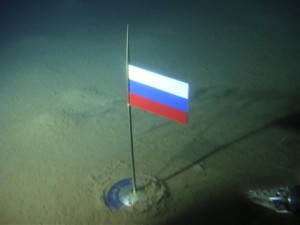

In this Thursday, Aug. 2, 2007, photo, a titanium capsule with the Russian flag is seen seconds after it was planted by the Mir-1 mini submarine on the Arctic Ocean seabed under the North Pole.

 http://www.telegraph.co.uk/news/worldnews/europe/russia/11782413/Russia-claims-resource-rich-swathe-of-Arctic-territory.html

1)  How do we know what is true in this story?  In what ways should we decide claims like this?  

2)  Why might a Russian teenager feel differently about this than an American?  The same?  Why might this be good for Europe?  Bad?

3)  How is this connected to art?  In what ways is this connected to the moon landing?

4)  To what degree would this be different if Greenland was not a territory of Denmark?  In what ways would this be different if Russia did not already have massive natural resource wealth?

5)  What are the basic assumptions in this article?  Can a new law be developed on this claim?  To whom is this story most significant?  

Extension Activities:

1)  Students can research territorial claims around the world and develop a plan for one of their choice.

2)  Students can research the development of the Russian territory and it's time zones and offer advice to leaders on how to best reach places far from administrative centers.

AoK:  Human Sciences

WoK:  Reason,


Monday, May 4, 2015

Modern Day Treasure Hunt goes Awry

$2 Million Treasure Hunt "Out of Control"


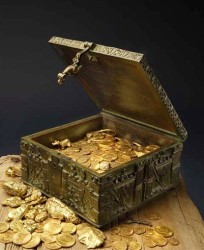
This undated photo provided by Forrest Fenn shows a chest purported to contain gold dust, hundreds of rare gold coins, gold nuggets, and other artifacts.


http://www.newser.com/story/206208/hunt-for-authors-treasure-chest-out-of-control.html

1)  Why should we believe that the clues are real?  The treasure itself?  Do you believe his reasoning for the contest?  Why? What questions of evidence in this article are not associated with the treasure itself?

2)  Why might his relatives feel differently than others about this contest?  To what degree should the New Mexico Tourist Board promote this contest?  Why might the director of a non-profit feel differently than a stock broker about this?

3)  How is this connected to gym class?  In what ways is this connected to "pirate treasure hunts"?  Is this more geography or math?

4)  What if someone else got injured in the search?  What if it's never found?

5)  What are the long-term effects of this story?  What should be done by the person who finds the treasure?

Extension Activities:

1)  Students can research the value of the coins and create an itinerary to find the treasure and see if it is worth it?

2)  Students can compare this to famous searches for treasure (real or fiction) and rank which would have the highest value?


Tuesday, October 28, 2014

Hiker Defaces National Parks for the Likes

Why the Creepytings National Parks Vandalism is a Big Deal

creepytings-graffiti

http://www.modernhiker.com/2014/10/23/why-the-creepytings-national-parks-vandalism-is-a-big-deal/

By:  Casey Shreiner

1)  Is photographic evidence reliable?  What's the difference between graffiti and folk art?  How do you know?  Can nature be considered art?  Who might have the most convincing argument?  What information would you need to punish the artist?   

2)  Why might a park ranger and a native American have similar views on this issue?  Different?  Why might there be an issue between urban and rural citizens over this issue?  People over the age of 45 vs. those under?

3)  Have we seen something like before?  Locks on bridges in Paris?    Is this a geography, science, history, or visual arts issue?  How is graffiti like tattooing?  Different?  How does time affect our view of art?  

4)  What if she used Photoshop to make it seem as if the graffiti was real?  How might this be different is she was famous?  A man?  A Native American?  An environmentalist?  What is we banned photography in national parks?  What if there was a special tagging section set aside in every national park?       

5)  What is the impact of this issue?  Will National Park attendance be affected?       

Extension Activities

1)  Students can study the cave paintings of Europe and evaluate the effectiveness of their protection.

2)  Students can offer temporary and safe tagging solutions to those who might want to deface National Parks/Monuments/Sites.

3)  Students can study street art and how it's been elevated in our culture through artisits like Banksy and Shepard Fairey and create art based on their famous works..  


Sunday, October 26, 2014

Beyond Angkor: How lasers revealed a lost city

Ancient 'Lost City' Brought to Life With Lasers

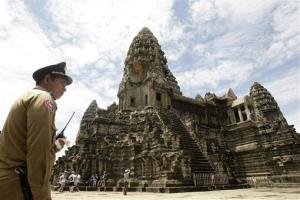
In this photo taken on June 28, 2012, a police officer stands guard at Cambodia's famed Angkor Wat temple complex in Siem Reap province.
 (AP Photo/Heng Sinith)

By Ben Lawrie

1)  How do we know what happened in the past?  Can we trust personal accounts? How reliable is a diary for historical evidence?  Should historians or scientists receive credit for this "discovery"?  Should someone else?     

2)  Why might a Cambodian and a French person have different perspectives on the excavation of Angkor?  How might an archaeologist from 100 years ago see this differently from a modern-day archaeologist?     

3)  What is your town's "Angkor Wat"?  In what ways is Angkor Wat like Rome?  Athens?  Mexico City?  The Moon?  What was happening in different parts of the world at the height of Angkor Wat?

4)  What would happen if we allowed people to build without restriction on ancient sites?  What if construction was restricted on sites older than 100 years?  1000 years?  10 years?  

5)  What is the significance of this story?  Who is affected by the new methods used to map Angor?  Is it ethical to excavate ancient sites?    
Extension Activities:

1)  Students can research similar "lost cities" to compare and contrast their development, rise, and fall.  
2)  Students can read a chapter from Jared Diamond's Collapse and report back to the large group on how resource depletion can lead to abandonment of cities.
3)  Students can predict how major cities of the world will grow or decline in prominence.
4)  Students can journal as the city through a personified life time (i.e., When was Ankgor a teenager, how did it feel, what was happening?, as it grew older? etc.)